As more people are encouraged to switch to electric vehicles, not just for environmental reasons (or rebates) but also for the convenience of charging at home, one major factor often overlooked is the cost of charging away from home. While EVs generally cost less to operate than traditional gasoline-powered vehicles, public charging is not always as cheap as people expect.
Depending on the charging network and time of day, the cost per mile can sometimes approach that of a fuel-efficient hybrid. EVs still have a considerable advantage over most ICE (internal combustion engine) vehicles, especially larger pickups and SUVs, but charging economics are not always as straightforward as many advertisements make them seem.
Finding the cheapest charging rates can also be a hassle. Many charging networks use time-of-use pricing, with the lowest rates typically available late at night and during the early morning hours. In many cases, drivers must purchase a membership or subscription plan to access the best pricing. However, California drivers may be surprised to learn that free DC fast charging still exists.
California’s Free DC Fast Charging Network
California operates a network of free DC fast chargers through Caltrans, and Fresno happens to be home to one of them. The Fresno location is conveniently situated near Highway 99 at the Olive Avenue and West Avenue interchange. Unlike slower Level 2 chargers that may require several hours to substantially recharge a battery, these Level 3 DC fast chargers can add significant driving range in a relatively short amount of time.
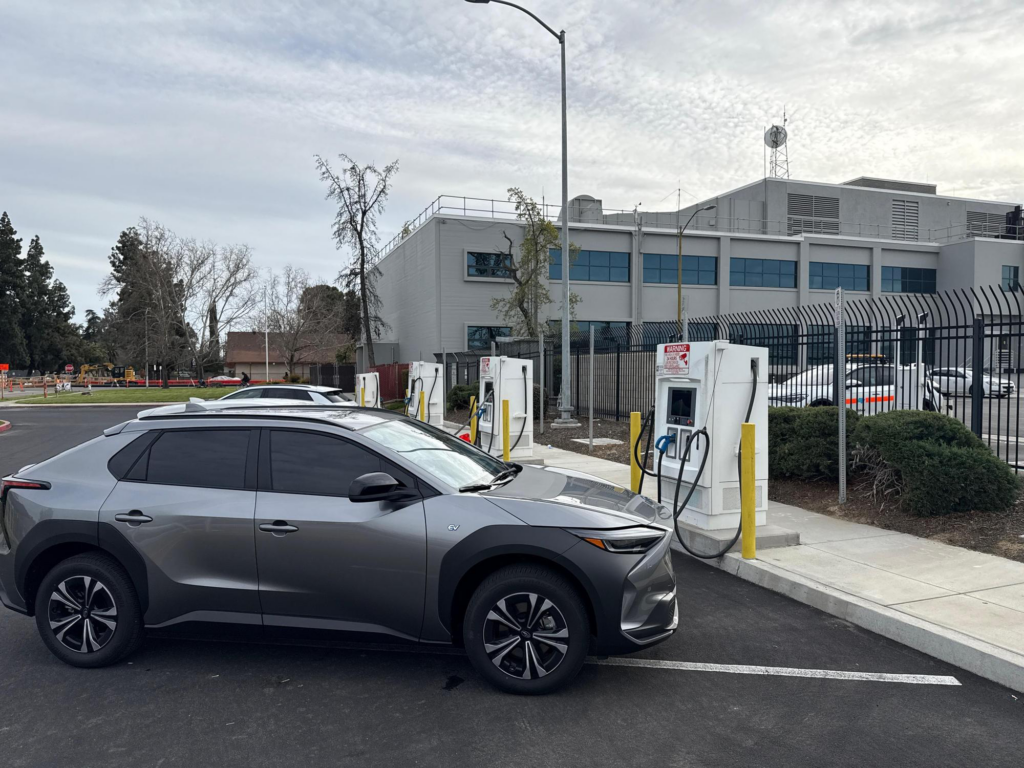
Admittedly, some chargers at the Fresno location have experienced downtime over the years, but the site is regularly maintained and typically has multiple operational units available. Like any charging station, there may be occasional wait times during busy periods. Other times, however, chargers are readily available with no wait at all.
If you can work charging into your schedule, it may be possible to dramatically reduce or even eliminate your vehicle fueling costs.
Free Charging Locations Worth Checking
- Fresno (Highway 99 near Olive Avenue and West Avenue)
- Phillip S. Raine Rest Area, Tulare County (northbound and southbound Highway 99)
- Warlow Rest Area
- Madera (currently reported as non-operational at time of writing)
- Bakersfield (currently reported as non-operational at time of writing)
The Phillip S. Raine Rest Area is particularly useful for travelers, as both northbound and southbound sides of Highway 99 provide charging options. These stations typically include CCS connectors used by most modern EVs and CHAdeMO connectors commonly used by older Nissan Leafs and a handful of other early-generation electric vehicles.While many newer vehicles are adopting the North American Charging Standard (NACS), adapters are available for some CCS and NACS vehicles, allowing access to additional charging options depending on compatibility.
At the time of writing, the Caltrans charging stations in Bakersfield and Madera have been reported as out of service. Still, that status may change in the future, making them worth checking before planning a trip around them.
Charging Anxiety? There’s an App for That
One of the biggest concerns prospective EV owners have is charging anxiety. Where are the chargers? Are they working? Will they be occupied when you arrive?
Fortunately, there are apps designed specifically to answer those questions. PlugShare functions as a crowdsourced database where users report charger availability, upload photos, provide reviews, and document equipment issues. Before visiting a charging location, it can be useful to check recent user reports to see whether the chargers are functioning properly and whether drivers have recently encountered wait times.
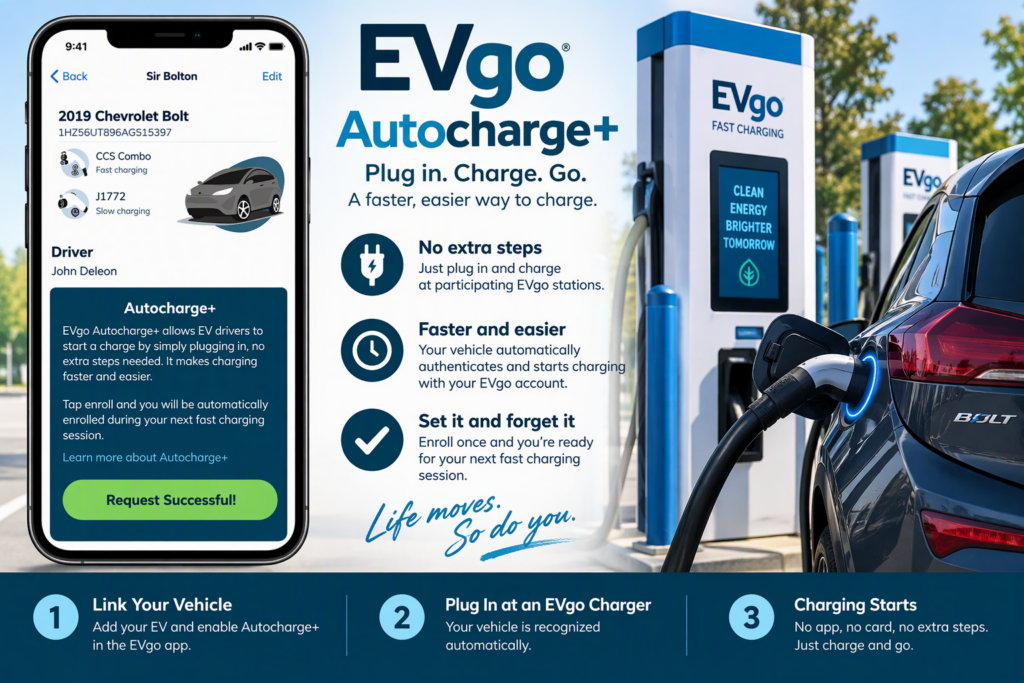
EVgo’s app takes things a step further by displaying charger availability in real time, showing charging speeds, and allowing drivers to start and monitor charging sessions directly from their smartphones. For many EV owners, it is one of the simplest charging networks to use.
Many newer EVs also support Plug & Charge (AutoCharge) functionality. Once properly configured, the vehicle can automatically authenticate and begin charging when plugged in, with payment handled behind the scenes. If you’re purchasing a used EV, it is a good idea to verify that any previous Plug & Charge registrations associated with the VIN have been removed and reconfigured under your account. Otherwise, billing issues can sometimes occur if the previous owner’s charging information remains attached to the vehicle.
Free Fuel Is Hard to Ignore
Modern DC fast charging is also faster than many people realize. Some stations can deliver up to 350 kW of power, allowing compatible EVs to gain substantial range during a relatively short stop. Depending on the vehicle and charging conditions, even a 10- to 20-minute charging session can add roughly 100 to 300 miles of driving range.
That means charging often happens while you’re already doing something else. Grabbing lunch, shopping for groceries, taking a restroom break, stopping at a truck stop, or simply stretching after a long drive can all coincide with a charging session. Unlike standing next to a gas pump, EV drivers can usually plug in and walk away while the vehicle charges.
With used EV prices continuing to fall and many low-mileage examples available on the market, there has arguably never been a better time to consider making the switch. EVs are not perfect, and public charging infrastructure still has room for improvement. However, free DC fast charging opportunities provided by Caltrans represent a unique advantage for California drivers willing to plan ahead.
If you’ve ever considered switching to an EV, knowing that free fast charging exists throughout portions of California may provide one more reason to take a closer look.