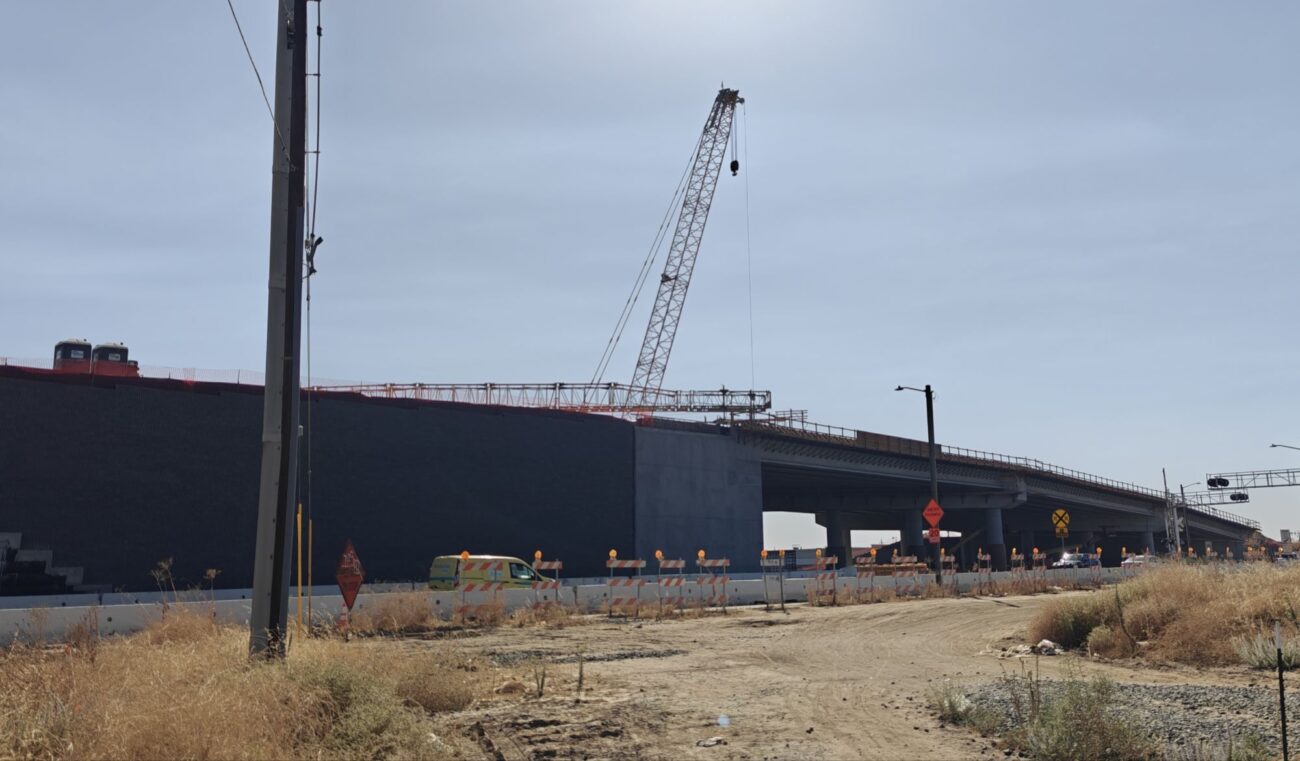
The overpass itself now appears to be taking its final shape. From ground level, the structure stretches continuously over the railroad tracks, with the bridge deck, support columns, and retaining walls all visibly in place. Construction activity remains ongoing, however, as crews continue work on the approaches and finishing elements of the project. Equipment, temporary barriers, and unfinished ground surfaces serve as reminders that the crossing is not quite ready for public use. Still, based on its current appearance, the project has clearly moved beyond its early construction phases and is beginning to resemble the finished overpass that motorists, pedestrians, and bicyclists will eventually use.
While most people will likely think about the benefits for drivers, the project stands to improve travel for everyone. Obviously, freight trains can halt not only vehicle traffic but also pedestrian and bicycle movement through the area. Once the overpass opens, all users of the corridor will be able to cross above the tracks without waiting for a train to pass or making a sometimes significant detour to another crossing. For someone on foot or on a bike, that extra distance can be far more noticeable than it is for motorists. The new overpass will create a direct connection across the railroad corridor regardless of whether a train is present. That means fewer delays, a safer crossing option, and no more wondering whether a stopped train will add several miles to what should have been a short trip.