 by
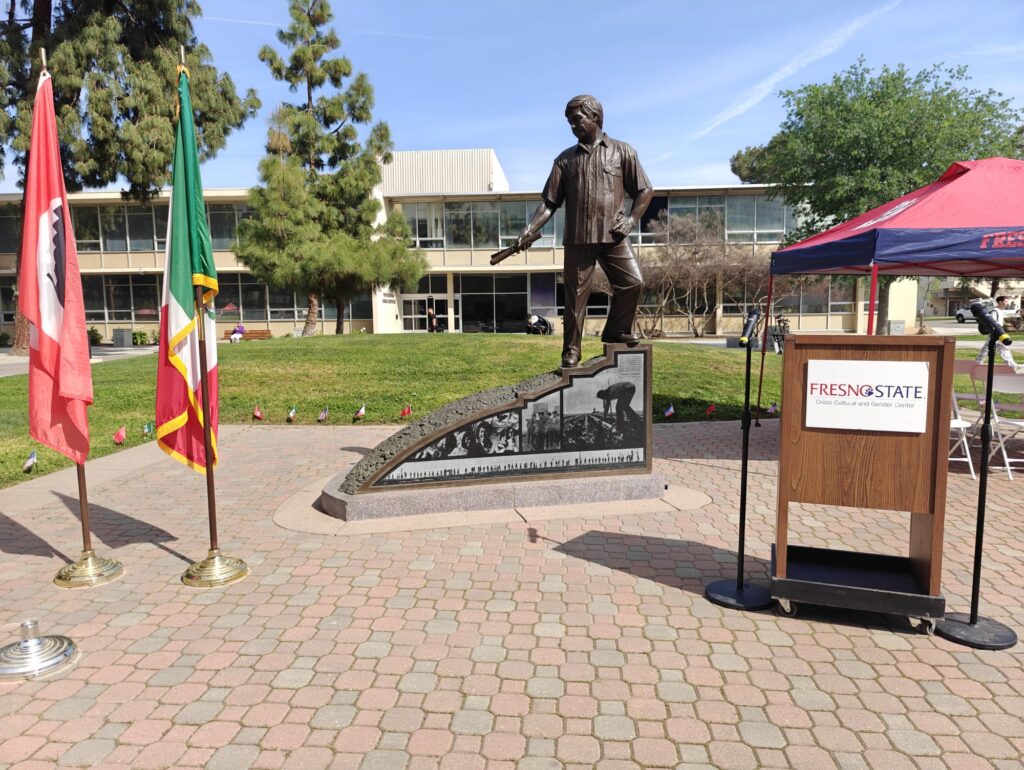
by Fresno State’s Peace Garden has always been one of those places you walk through without thinking—until something changes. Until something is missing. Not long ago, I stood in front of the César E. Chávez statue outside the library during a farmworker‑centered event. The red UFW flag was waving, students were gathered, and the statue wasn’t just a piece of bronze on a pedestal. It was part of the moment—part of the story Fresno tells about itself, its agricultural roots, and the people who shaped the Central Valley’s labor history.
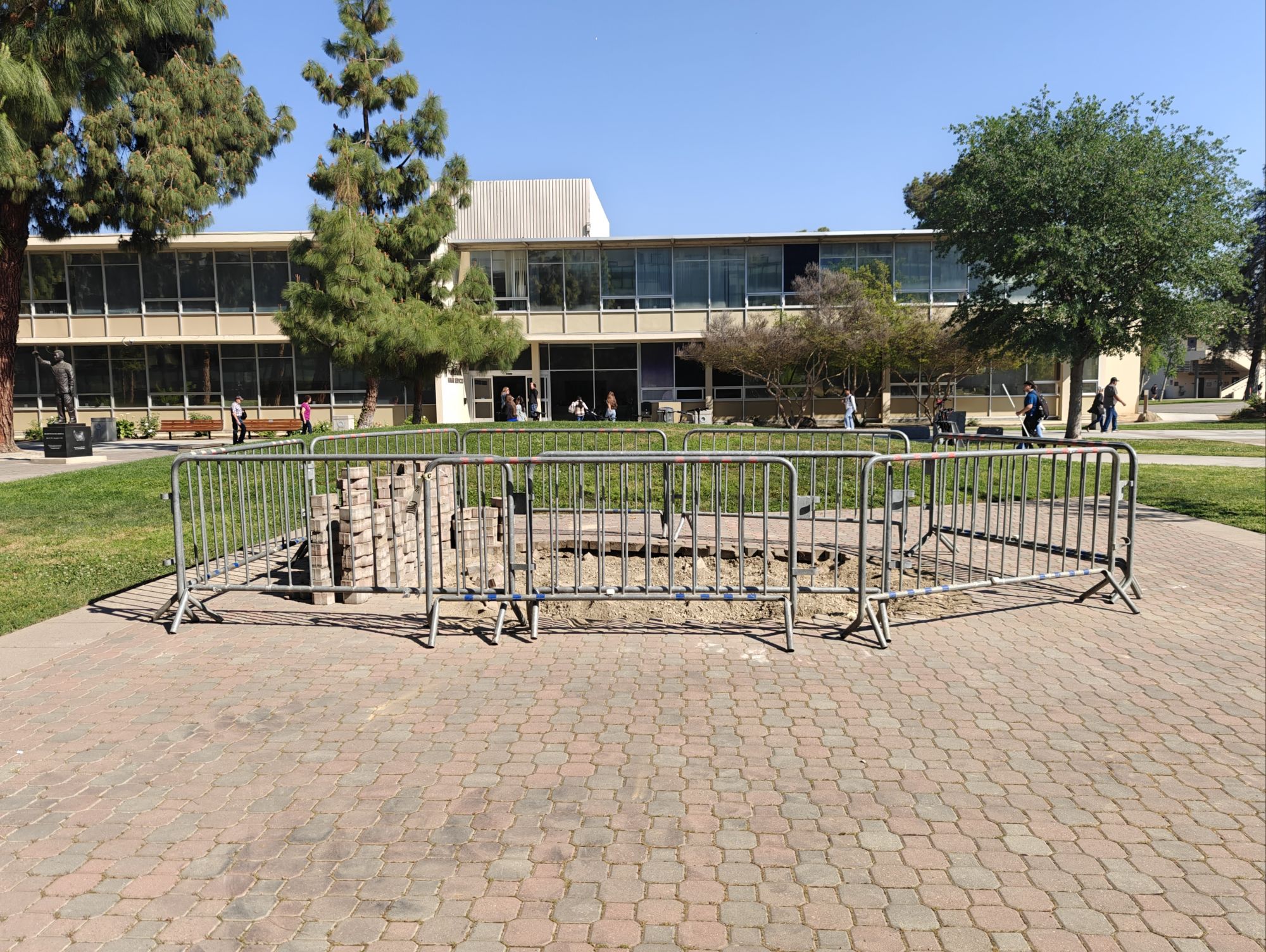
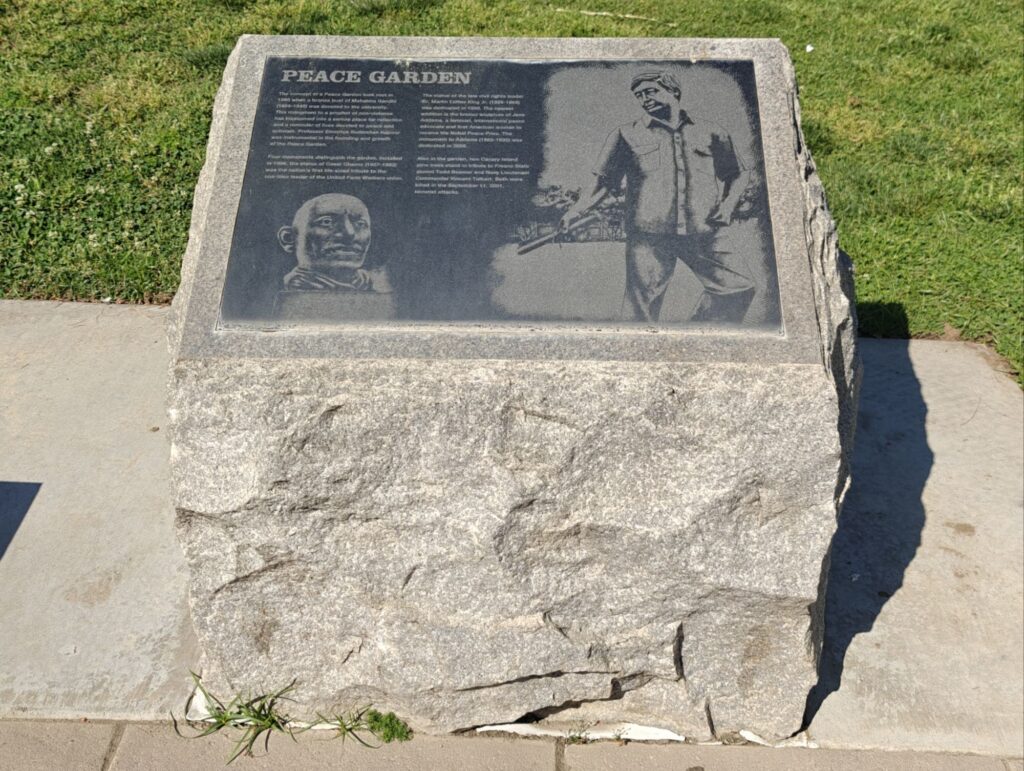
Today, that same spot is fenced off, dug up, and empty. If you didn’t know a statue once stood there, you’d never guess. There’s no plaque, no outline, no marker. Just bricks, barricades, and a square of disturbed ground where a civil rights leader used to stand. The only remaining evidence that Chávez was ever honored here is a plaque deeper inside the Peace Garden—a stone marker that pairs him with Gandhi and speaks to their contributions to peace, justice, and human rights. Without the statue, the plaque feels less like a companion piece and more like a quiet reminder of something that’s been removed.
What Does It Mean When a Statue Disappears?
Seeing the empty space hit me harder than I expected. Not because I believe Chávez was flawless—he wasn’t. Few major leaders are. But because the removal forces a question we don’t always like to ask: What do we do with leaders who were essential to a movement but imperfect as individuals? César Chávez was the face of the farmworker movement, but he wasn’t the movement itself. Dolores Huerta, countless organizers, families, and workers carried that struggle forward. The victories weren’t his alone, and the flaws weren’t his alone either. Like many civil rights figures, parts of his legacy were softened or downplayed to keep the focus on the cause.
And honestly, this isn’t unique to Chávez.
American history is full of leaders whose legacies are a mix of progress and harm. We celebrate FDR for Social Security and the New Deal, yet we still grapple with the incarceration of Japanese Americans under his administration. Andrew Jackson remains on our currency despite policies that devastated Native communities. We elevate the good, bury the bad, and hope the contradictions don’t catch up with us. So when a statue comes down — especially one tied to a movement as local and personal as farm labor in the Central Valley — it forces us to confront the whole picture.
Does Removing a Statue Remove the Legacy?
No. The work Chávez stood for doesn’t vanish with a pedestal. The fight for farmworker dignity didn’t begin with him, and it certainly didn’t end with him. The movement was always bigger than one man. But removing a statue does change how future students encounter that history. It changes what they see, what they ask, and what they learn by accident — the way so many of us first learned who Chávez was simply by walking past him on the way to class. Now, unless someone wanders into the Peace Garden and reads the plaque (or until it is altered), they may never know he was there at all.
A Moment Worth Documenting
I’m not here to argue whether the statue should or shouldn’t have been removed. I’m here to document the moment — the before, the after, and the questions that linger in between. Because Fresno’s story is tied to farmworkers. To activism. To the people who bent over fields so this region could grow. And whether we honor Chávez with a statue or with a plaque or with nothing at all, the movement he helped ignite still shapes the Valley today. Maybe the real work isn’t deciding who gets a statue. Maybe it’s deciding how we remember—and who we remember—when the statues are gone.